

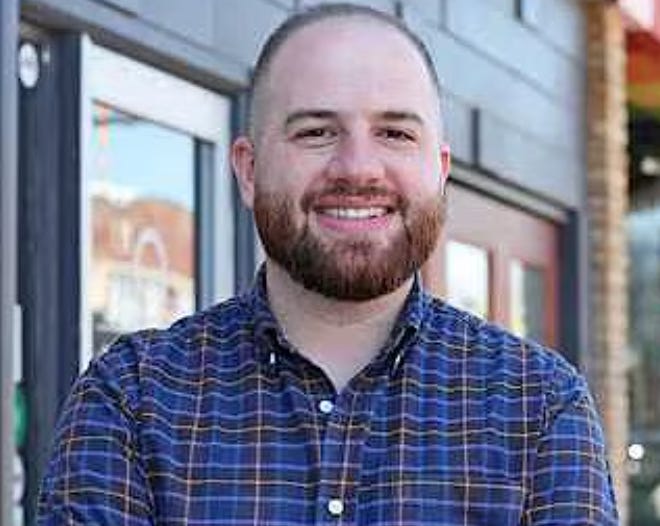
The political landscape for Democrats in Michigan has shifted beneath their feet as the party grapples with a rapidly growing anti-Zionist wing. Amid this tension, Jewish Michigan State Senator Jeremy Moss, who recently secured the Democratic primary for the 11th Congressional District, found his career suddenly stalled by a leaked audio recording. In the audio clip which spread like wildfire across digital platforms in July 2026, Moss appeared to admit that his primary motivation as a legislator is to serve a foreign power. According to the recording, Moss stated, “The entire purpose of my career is to make sure America continues to support Israel, I don’t think it’s wrong for Israel to use America as a pawn, America is not our homeland, we have been victims of antisemitism here.” These words, which suggest a priority for Israel over his own constituents, ignited a firestorm of controversy and provided a flashpoint for voters increasingly tired of the influence exerted by foreign interests in American governance.
Jeremy Allen Moss, born in Detroit on June 23, 1986, has been a lifelong resident of Southfield, Michigan, and currently serves as state senator for the 7th District. A graduate of Michigan State University with a bachelor’s degree in journalism and a second major in political science, Moss was elected to the Southfield City Council in November 2011 at age 25, becoming the youngest person ever elected to that body. He is notable for being both the first homosexual person elected to the Michigan Senate and its current President Pro Tempore. His career in the state legislature began in 2014 when he won election to the Michigan House of Representatives for the 35th district, where he served as Democratic Caucus Whip before moving to the state Senate in 2019. As he prepares to move into the U.S. House of Representatives following his August 2026 primary victory in Michigan’s 11th Congressional District, he remains a key figure in suburban Detroit’s Democratic machine, representing an area with a high concentration of Jewish voters.
His legislative record is marked by a focus on progressive social issues, including sponsoring the expansion of the Elliott-Larsen Civil Rights Act to extend additional privileges to LGBT individuals. However, his tenure in the state Senate has been equally defined by his vocal defense of Israel and his aggressive posture against those who question the nature of the U.S.-Israel relationship. He has consistently served as an institutional voice for the Jewish community, frequently speaking out on behalf of what he calls “the liberal Israel-supporting community” and serving as the legislative spearhead of the Black and Jewish Unity Caucus—the legislative arm of a coalition between the Jewish Community Relations Council/American Jewish Committee (JCRC/AJC) and the Council of Baptist Pastors of Detroit. He has simultaneously worked within civic groups including the Martin Luther King Task Force, on which he serves as an advisory board member, and the Greater Southfield/Farmington chapter of the NAACP.
Moss has long occupied the front lines of the internal Democratic conflict over the Middle East. During the November 2023 dispute regarding Congresswoman Rashida Tlaib’s use of the phrase “from the river to the sea,” Moss was among the most vocal critics. “This is not how Jews view the phrase ‘from the river to the sea,’” he wrote on X. “Hamas uses it as a rallying cry. And they don’t simply want to displace Jews in Israel. They want Jews dead.”
Later, during the campus protests of spring 2024, he asserted on the Senate floor that “’Zionist’ is now being weaponized as a slur.” He further attempted to codify these views into law during 2025 by co-sponsoring antisemitism legislation that incorporates the IHRA definition of antisemitism. For Moss, the protection of the state of Israel and the maintenance of its perceived security are inseparable from his domestic agenda.
The intensity of these battles reached a fever pitch on March 12, 2026, when Ayman Mohamed Ghazali, a 41-year-old Lebanese-born American citizen, drove a Ford F-150 through the front doors of Temple Israel in West Bloomfield Township and opened fire with an AR-15-style rifle before being killed by security guards. The FBI called it a “targeted act of violence against the Jewish community.” Moss immediately went public with his response, telling CNN: “We stand on guard all the time for somebody to penetrate a house of worship or a school or another Jewish institution with an act of terror. And so we’re a community that’s kind of used to learning and praying in a fortress. It’s no way to live, but it’s the reality.” By July 2026, Moss championed a $23 million state appropriation for security measures at Jewish institutions across Michigan. “The sad reality is that this is an ongoing need,” he said.
However, his campaign for Congress took a jarring turn with the appearance of the hot mic audio in July 2026. While primary opponents Aisha Farooqi and Don Ufford publicized it to highlight Moss’s alleged ties to AIPAC-linked donors and foreign lobbies, Moss dismissed it as “manipulated and unsourced.” Despite the controversy, Moss emerged victorious in the primary, signaling that his established donor network and institutional support from the organized Jewish community remain potent forces even as the party’s base drifts from his position.
The skepticism toward Moss’s stance exists within a party where rank-and-file members are rapidly shedding support for Israel. This domestic dissatisfaction is mirrored by overwhelming opposition to the U.S.-Israeli war with Iran. A Gallup poll conducted July 7-21, 2025 found that only 12 percent of Democrats approved of U.S. military action against Iran, while a Quinnipiac poll conducted March 6-8, 2026, days after Operation Epic Fury began, found that 89 percent of Democrats opposed the current U.S. military action against Iran, with only 7 percent in support.
Congressional votes have similarly reflected this anti-war consensus: 92 percent of Democrats polled said Trump should have sought congressional approval before striking Iran, and the vast majority of House Democrats supported War Powers resolutions to rein in the administration’s authority to continue the conflict. The party is effectively moving toward a stance of restraint, leaving figures like Moss, who remain committed to serving the Zionist endeavor, increasingly isolated from the prevailing ideological currents of their own coalition.
The divide between the American public and its political class is widening, and Moss represents the tail end of an era that is rapidly coming to a close. As support for Israel erodes across the American political spectrum, the institutional power wielded by figures like Moss faces an existential test. History is a cyclical beast, and once again, the Jewish community finds itself acting as an isolated minority in a nation that no longer shares its political priorities.
NEXT:
A Jewish Legislator Was Cornered at a Trans March. This Is What Came Next

Protesters descended on State Senator Scott Wiener on June 27, 2026, the Friday of San Francisco Pride weekend. Wiener was walking through Dolores Park to attend a trans-led Pride Shabbat service connected to the annual Trans March, an event he had attended every year since 2004. Pro-Palestinian activists recognized him, encircled him, and erupted in fu…
If you like the content, feel free to continue supporting my work.
Buy Me A Coffee: https://buymeacoffee.com/josenino
Why would any non-✡️ support this soft-boiled egghead, openly supporting a foreign country when not a single soul in shitgress can vocally defend White interests? And gays are still inventing special privileges for themselves in 2026?
I suspect this really is faked. What he “said” was so obviously designed to hit all the bases in one snippet and “ignite a firestorm” of holocaust imagery. Don’t think real people talk like that. Jews appear to be "accelerating" antisemitism.