

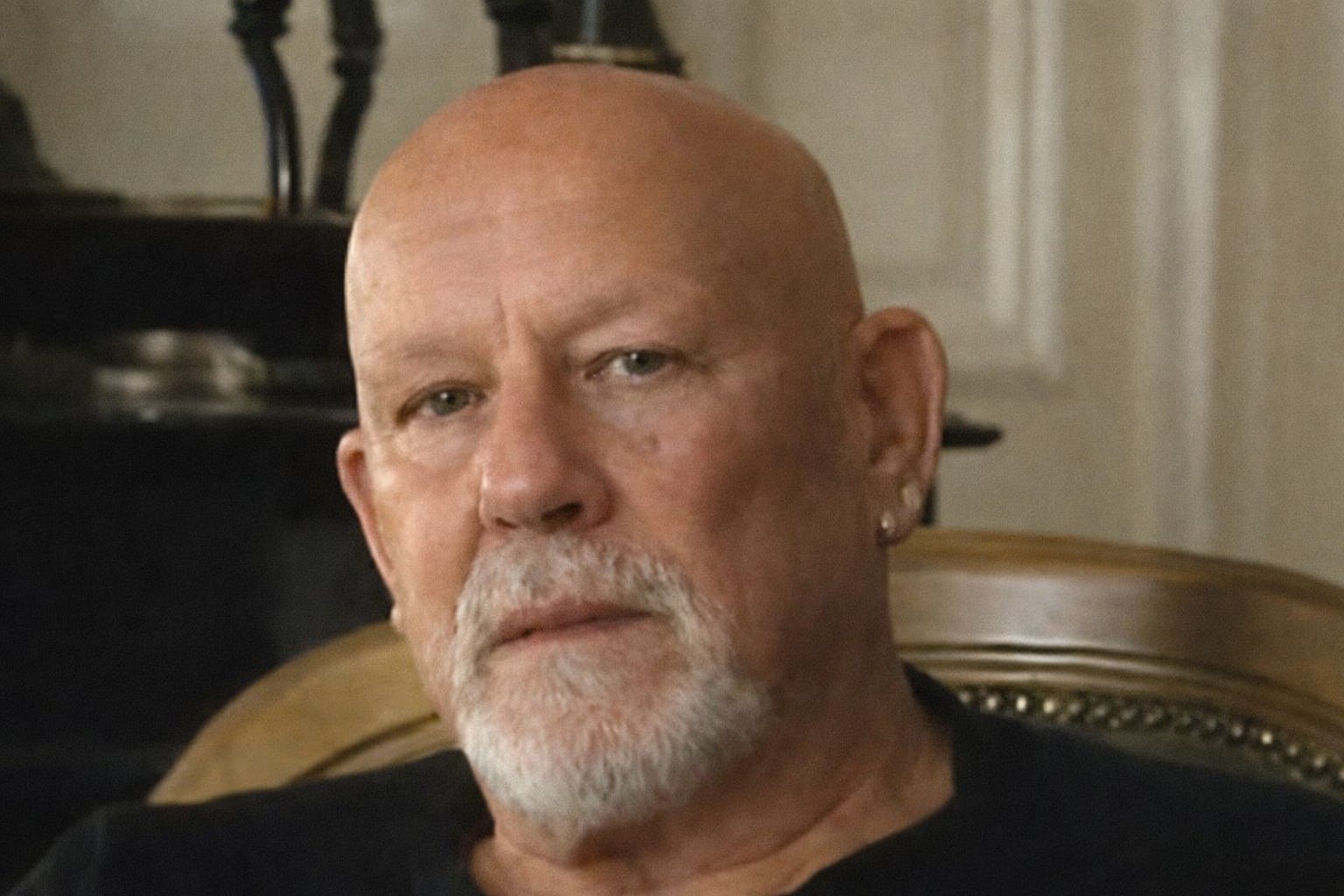
From Israel’s paratrooper units to Colombia’s conflict zones, Yair Klein exported his special operations expertise to train cartel-linked fighters, leaving a trail of devastation amid ongoing questions about justice for his role. Klein had a storied career within the Israel Defense Forces. He served in the elite paratroopers and commanded a secretive reconnaissance unit, positions granting him access to Israel’s most sensitive military tactics. In 1972, he participated in Operation Isotope, the highly-publicized rescue of hostages aboard Sabena Flight 571 at Tel Aviv’s Lod Airport. The Sayeret Matkal unit neutralized Black September hijackers in just six and a half seconds, cementing Klein’s reputation as a skilled special operations soldier.
Klein’s combat résumé deepened during the Lebanon War of the early 1980s, where he commanded both a battalion and an infantry brigade. This experience in Lebanon’s chaotic counterinsurgency warfare exposed him to urban combat and the intricate relationships between regular military forces and irregular militia groups. This knowledge would become his most valuable commodity.
Professor Aharon Klieman of Tel Aviv University captured the economic logic driving Klein’s career transition with brutal clarity. “If you take a guy who grows up on a farm and then goes to the army, when he leaves, he knows two things: how to cultivate tomatoes and warfare,” Klieman explained. “There is much more money in warfare.”
Around 1983, Klein co-founded Spearhead Ltd, operating from Tel Aviv offices. What distinguished Klein from common mercenaries was the official sanction he received from the Israeli state. A 1986 document signed by then-Defense Minister Yitzhak Rabin explicitly licensed Spearhead for “the export of military know-how and defence equipment.”
His first major client emerged from Lebanese connections. The Christian Phalange Militia, perpetrators of the Sabra and Shatila massacres that killed between 1,300 and 3,500 Palestinian and Lebanese Shia civilians in 1982, needed equipment. “The Phalanges needed belts, helmets and personal equipment,” Klein recalled matter-of-factly. This initial deal netted $2 million, enough for Klein to decide to dedicate himself fully to “teaching and promoting the art of war throughout the world.”
Klein’s involvement in Colombia began in 1987, when the country’s conflict among the state, leftist guerrillas, drug traffickers, and emerging paramilitaries was putting the state on the brink of collapse. Klein has consistently maintained his entry was legitimate, claiming he traveled to Colombia to offer services to “peasants who wanted to confront guerrillas.”
According to Klein’s account, his 1987 visit included meetings with Police Chief Carlos Arturo Casadiego, representatives of Atlas Security, and members of the Department of Administrative Security (DAS), Colombia’s now-defunct intelligence agency. Klein claimed DAS agents greeted him at Bogotá’s El Dorado Airport during his second 1988 visit and assured him “there was nothing illegal” about his activities.
Between 1988 and 1989, Klein established training operations in Puerto Boyacá, a municipality controlled by ACDEGAM, an organization fronting for paramilitary death squads funded by wealthy landowners and the Medellín Cartel. Klein admitted receiving $40,000 for 1988 training, though Colombian investigations revealed payments totaling $70,000 annually through three installments from an unnamed congressman in Bogotá, Luis Meneses in Jerusalem, and local Puerto Boyacá contacts.
Klein’s client list represented a rogues’ gallery of Colombia’s criminal underworld. Among his trainees were Pablo Escobar Gaviria, the world’s most powerful cocaine trafficker, and Gonzalo Rodríguez Gacha (”El Mexicano”), one of the Medellín Cartel’s most infamous figures.
Most significantly, Klein trained the Castaño brothers, who would found the AUC (United Self-Defense Forces of Colombia), the most deadly paramilitary organization in Colombian history. Carlos Castaño Gil had previously spent 1983-1984 in Israel receiving military training at Hebrew University and Israeli military schools. In his autobiography Mi Confesión, Castaño expressed his admiration for Israeli Jews: “I admire the Jews for their bravery in confronting anti-Semitism, their strategy for survival in the diaspora, the surety of their Zionism, their mysticism, their religion and above all for their nationalism.”
The most damning evidence emerged from a training video broadcast by NBC News on August 21, 1989, just three days after presidential candidate Luis Carlos Galán’s assassination. The video, reportedly made by drug lords to demonstrate their capabilities, showed Klein and other instructors teaching military tactics, bomb-making techniques, assassination methods, ambush strategies, and terror tactics designed to destabilize political opposition.
A 1991 U.S. Defense Intelligence Agency report listed Klein among “the more important Colombian narco-terrorists contracted by the Colombian narcotic cartels for security, transportation, distribution, collection and enforcement of narcotics operations.” The DIA described Klein as having sent “advisors to the Medellín cartel to train the cartel paramilitary forces and selected assassin team leaders on how to unleash waves of terrorism in Colombia.” Klein’s team included other Israelis such as Teddy Melnik and a figure known only as “Mike N.,” along with British mercenaries teaching the use of plastic explosives, grenades, and letter bombs.
The consequences of Klein’s instruction of Colombian paramilitary and cartel actors manifested in some of the country’s most notorious killings. Luis Carlos Galán was murdered on August 18, 1989, with an Israeli Galil rifle traced to Klein’s weapons shipments. The presidential candidate and anti-drug crusader’s death shocked Colombia and the world. Jaime Garzón, Colombia’s most beloved political satirist and peace activist, was assassinated on August 13, 1999, on orders from Carlos Castaño. Avianca Flight 203 was bombed mid-flight on November 27, 1989, killing all 107 people aboard. Klein was suspected of training the Medellín Cartel-affiliated bombers and supplying them with explosive materials. On top of that, the cartel’s bombing of the DAS Headquarters on December 6, 1989, resulted in the deaths of 63 people and approximately 1,000 other people injured in Bogotá.
Klein’s perfidy did not end there. In March and April 1989, Klein orchestrated what became known as the “Guns for Antigua“ scandal. The conspiracy involved shipping 400 IMI Galil assault rifles, 100 Uzi submachine guns, and 200,000 rounds of ammunition from Israel through Antigua and Barbuda to the Medellín Cartel.
The operation involved several key figures working in coordination. Maurice Sarfati, a Lebanese-born Israeli, established a melon farm in Antigua that served as cover for the scheme, receiving financial backing from Bruce Rappaport. Rappaport himself was an international banker believed to maintain contacts with intelligence services including the CIA and Mossad, and counted former CIA Director William J. Casey among his personal friends. The third major conspirator was Vere Bird Jr., Antigua’s Minister of Public Works, who provided official legitimacy to the operation by signing the end-user certificate that falsely promised the weapons would not be transferred to third parties.
The Israeli government shipped the weapons from Haifa port with Israel Military Industries sending guns in sealed containers marked “machine parts.” An Israeli Defense Ministry spokesperson later admitted the transaction was carried out “under all the usual procedures at the Defense Department.”
The conspiracy unraveled after Galán’s assassination when Colombian police raided Rodríguez Gacha’s home and discovered hundreds of IMI Galil rifles, including the murder weapon. Serial numbers on 215 rifles traced directly to the Israeli government shipment to Antigua.
Klein later made explosive claims that the entire Antigua operation was orchestrated by the CIA as preparation for a coup against Panamanian leader Manuel Noriega. According to Klein, the CIA hired him to train Colombians on Antigua for overthrowing Noriega, the operation was cancelled one week before execution, and after the U.S. military invaded Panama in December 1989, Luis Meneses was told he could “do what he wanted” with the weapons, which were sold to the Medellín Cartel. Klein claimed the CIA attempted to cover its tracks by “smearing” his name.
Klein’s operations were not rogue activities but government-sanctioned business. Multiple lines of evidence demonstrate Israeli awareness and authorization of his actions.
As mentioned before, the 1986 document signed by Defense Minister Yitzhak Rabin explicitly authorized Spearhead Ltd for military exports. Klein carried Israeli permits when entering Colombia. A 1991 U.S. Senate report specifically noted that “Israeli Embassy personnel (in Colombia) knew Yair Klein was operating in Colombia, but no action was taken against him until after reports of his activities surfaced in the media.”
According to Klein, Zvi Reuter, head of the Israeli Defense Ministry’s arms industry liaison department, “was duly informed of every move they made.” One high-ranking Colombian official stated “unequivocally” that “officials of the Israeli government knew and consented to the sale of the arms shipment to Colombia.”
After international exposure in 1989, the Israeli government attempted to distance itself. Defense Minister Rabin, who had signed Klein’s export license three years earlier, ordered Israeli families to leave Colombia and pressed for investigations. Officials began calling Klein a “mercenary,” as if he were an independent actor rather than a licensed contractor.
Klein became disillusioned with this abandonment. “It’s so hypocritical,” he told journalists. “Spearhead was the only organisation that served American interests, because it was fighting the Communist guerrillas, which were such a threat to the interests of the Americans. Now they turn around and say that cocaine is the biggest threat, so they turned against Spearhead.”
Israeli journalist Nahum Barnea defended Klein in Yedioth Ahronoth, noting that when Klein fought in Lebanon, Israel had done similar things with right-wing Phalangist allies active in the Lebanese drug trade. “The truth is that Yair Klein and myself have already gone to war in the service of the drug cartel once,” Barnea wrote. “It happened seven years ago in the Lebanon war… what is the moral difference?”
Klein’s mercenary activities extended beyond Latin America to West Africa. In 1999, he was arrested in Sierra Leone on charges of smuggling arms to the Revolutionary United Front, the rebel group infamous for systematic amputations, mass rape, and child soldiers during Sierra Leone’s brutal civil war.
Klein spent 16 months imprisoned before his April 2000 release. Testimony before the U.S. Congress revealed Klein’s involvement dated to at least 1996, allegedly providing “military material and training in Liberia and Sierra Leone.”
Investigations revealed Klein’s involvement in diamond mining operations, suggesting his real profit lay in natural resource access. Sierra Leone’s diamond fields financed the RUF’s war machine, and Klein’s alleged role in arming rebels would have facilitated black market access.
On February 23, 2001, the Special Judicial Criminal Circuit of Manizales, Colombia, sentenced Klein to 14 years in prison for training paramilitary groups and drug trafficking militias. On appeal, the Superior Court reduced this to 10 years and 8 months on charges including criminal conspiracy, illegal formation of a paramilitary group, and training terrorist organizations.
In August 2007, Russian authorities arrested Klein at Moscow Airport on an Interpol warrant. Russia’s Prosecutor General initially ordered his extradition to Colombia on January 29, 2008. Klein’s family argued that extradition would mean “certain death,” which prompted them to hire an aggressive legal team.
In April 2010, the European Court of Human Rights blocked Klein’s extradition, ruling he could be seriously mistreated and Colombia could not guarantee his physical safety. The Russian government appealed, but the ECHR upheld its ruling. On November 18-20, 2010, Russia released Klein and allowed his return to Israel, reportedly as a prisoner exchange. Klein landed at Ben-Gurion Airport around midnight, greeted by family and girlfriend Michal Bar.
Colombian officials reacted with outrage. Colombian President Juan Manuel Santos denounced Klein as an “engineer of terror.” In January 2011, Colombia formally requested that Israel extradite Klein, but under Israeli law, he was ineligible because he was in Israel at the time of the request and the crime was committed outside Israeli territory.
On June 10, 2012, Klein’s Colombian sentence expired in absentia. The First Court of Manizales ruled the full sentence had been completed and canceled the international arrest warrant. Klein had “paid the sentence in hiding.”
Klein has consistently maintained he trained “peasants who wanted to confront guerrillas” and believed he was helping farmers create “self-defense” units. He claimed that he had “no idea what he was doing was illegal” and insisted everything was done “with the approval of the Colombian authorities.”
Klein denied knowing trainees included Escobar and Rodríguez Gacha employees, claiming ignorance of drug trafficking connections. In a 2007 interview, Klein stated he was willing to return and help destroy the Marxist FARC guerrillas, criticized paramilitary demobilization as “stupid” while FARC remained active, and declared “the best chapter of my life was my time in Colombia” with regret at not having the ability to do more.
Klein’s controversies on Colombian soil did not end there. In November 2012, Klein made explosive allegations during testimony to a Colombian court. He claimed one of the landowners financing paramilitary training later became president, heavily implying Álvaro Uribe Vélez, who served from 2002-2010, was involved in such activity.
“One of the trainees was later president of Colombia…he was one of the landowners who paid for the training…I’m not saying the name because you know exactly who it is,” Klein stated. He clarified he had never met or been paid by Uribe directly but had been told Uribe was among those financing the training. Uribe responded furiously via Twitter, calling Klein a “bandit” (bandido) and “coward” (cobarde).

Despite overwhelming evidence that Klein’s training contributed to tens of thousands of deaths, his punishments were negligible. For the Guns for Antigua scandal, Klein pleaded guilty in Jerusalem Magistrate’s Court in November 1990 to three counts of illegally exporting military equipment. His punishment was merely a fine of $13,400.
His Colombian conviction of 10 years and 8 months was served entirely in absentia, with the sentence expiring due to the passage of time. His Sierra Leone detention lasted 16 months before release. No prosecution occurred for the specific massacres and assassinations his trainees committed.
Klein remains free today in Israel, protected from extradition by legal technicalities and the European Court of Human Rights’ concerns about Colombian prison conditions. The world demands justice for Yair Klein’s carnage, but Jewish networks and legal loopholes ensure he’ll die laughing—the ultimate sign of Jewish privilege in action.
NEXT:
Villains of Judea: Paul Singer’s Empire of Debt & Demographic Replacement

Paul Elliott Singer stands as one of the most influential figures in global finance. The Jewish billionaire hedge fund manager has amassed a fortune estimated at $6.2 billion to $6.7 billion by purchasing distressed sovereign debt and corporate bonds at deep discounts, then pursuing ruthless legal campaigns to extract full repayment plus interest.
If you like the content, feel free to continue supporting my work.
Buy Me A Coffee: https://buymeacoffee.com/josenino
What is interesting about the jews is that they put members of their race like Klein to great use, instead of denouncing them as amoral thugs and turning their backs on them. Even guys like this, barely a step up from a street gangster, are put to work to benefit the racial collective. I don't know if whites could emulate this, but it's something to think about.
Great article. I was vaguely aware of Klein and his cartel collaboration but didn't know he was also involved in the West African chaos.