

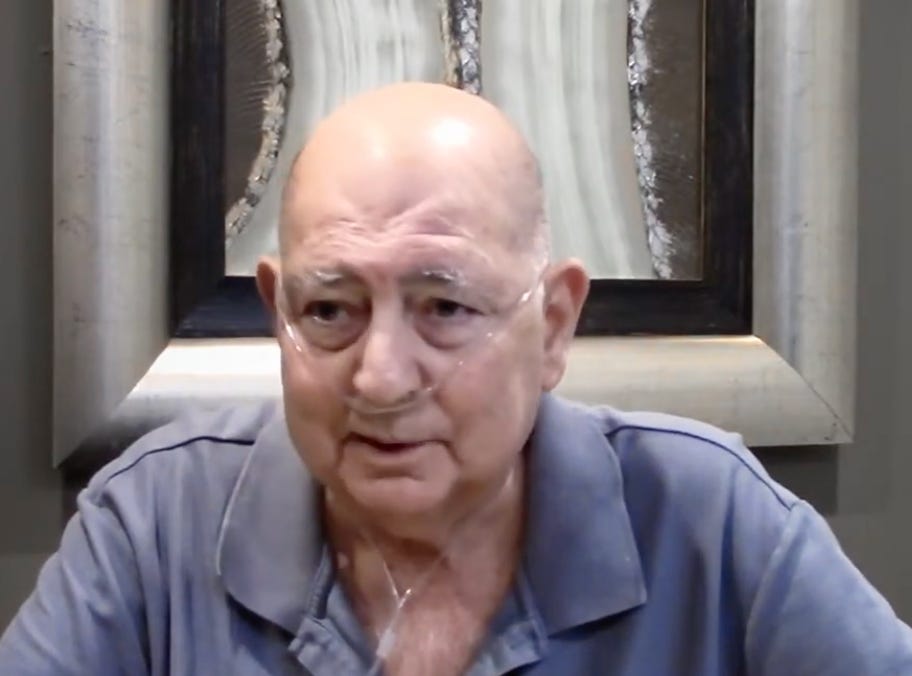
He operated from the shadows, shunned cameras, and cultivated an aura of mystery that made him appear less like a political consultant and more like a figure from a spy novel. Arthur Jay Finkelstein spent half a century whispering in the ears of presidents, prime ministers, and strongmen, teaching them the dark arts of political destruction. By the time he died in August 2017, his fingerprints covered the wreckage of democratic norms across three continents.
Finkelstein was born May 18, 1945 in Brooklyn’s East New York neighborhood to Jewish immigrant parents from Eastern Europe. His father drove a cab and worked in the garment trade. The family relocated to Levittown and later to Queens, where young Arthur attended Forest Hills High School. As a Columbia University student he produced radio programs for Ayn Rand, the libertarian philosopher whose ideas would mold his worldview for decades. He volunteered for the Draft Goldwater Committee in 1963 and 1964, getting his start in conservative insurgent politics before earning a degree in political science from Queens College in 1967.
A 1996 CNN report captured his mystique perfectly, calling him “the stuff of Hollywood: A man who can topple even the most powerful foes, yet so secretive that few have ever seen him.” He described himself as “the playwright or the director, and not the actor.” His rivals proved less charitable. Political consultant Philip Friedmann called him “the ultimate sort of Dr. Strangelove.” In Canada, where he exported his techniques, journalists dubbed him the “Merchant of Venom.”
The venom flowed from a methodology his clients called “Finkel-think.” The core premise was elegant in its cynicism: rather than persuade voters to back your candidate, you destroy the opponent so thoroughly that even apathetic citizens drag themselves to the polls to vote against him. Finkelstein believed perception mattered more than policy, that facts were malleable, and that people could be made to hate individuals more readily than institutions. His most celebrated innovation was transforming the word “liberal” into a political epithet. Political scientist Darrell M. West told the Boston Globe in 1996 that “He uses a sledgehammer in every race. I’ve detected five phrases he uses—ultraliberal, superliberal, embarrassingly liberal, foolishly liberal and unbelievably liberal.”
It was a method that delivered results, and Finkelstein delivered them almost immediately. He climbed the political ladder rapidly. At 25, he helped James L. Buckley win New York’s six-person 1970 Senate race. In 1972, his polling helped make Jesse Helms the first Republican elected to the Senate from North Carolina since Reconstruction. By the time he signed on with Canada’s National Citizens Coalition in 1982, nearly half of Republican Senators were his clients.
His client roster read like a directory of Senate conservatism across four decades: Jesse Helms of North Carolina, Alfonse D’Amato of New York, Strom Thurmond of South Carolina, Orrin Hatch of Utah, Don Nickles of Oklahoma, and Connie Mack III of Florida. He helped George Pataki unseat Mario Cuomo in 1994 by branding the governor as “too liberal for too long.” Finkelstein also worked on Ronald Reagan’s 1980 presidential campaign.
His most celebrated international achievement came in Israel. Hired by Benjamin Netanyahu in 1996 on the recommendation of cosmetics heir Ronald Lauder, Finkelstein engineered a come-from-behind victory over Shimon Peres that defied all pre-election polls. He brought American-style attack advertising to Israeli soil, running television spots featuring shattering black glass, blurry photographs of Peres with Yasser Arafat, and scenes of suicide bombings. The campaign centered on the slogan “Peres will divide Jerusalem.” Netanyahu ultimately won by a single percentage point, 50.5 percent to 49.5 percent.
Through their joint firm GEB International, Finkelstein and Israeli-American political consultant George Birnbaum subsequently worked for Ariel Sharon’s 2001 prime ministerial campaign, Avigdor Lieberman’s Yisrael Beiteinu party, and Jerusalem mayoral candidate Nir Barkat in 2008. His family’s statement after his death noted that he “helped develop Benjamin Netanyahu’s vision for a ‘secure peace’ and helped voters to view the hawkish war general Ariel Sharon as a leader who was also a trusted grandfatherly figure.”
His most controversial work, however, took place in Hungary. In 2008, Netanyahu introduced Orbán to Finkelstein and Birnbaum, who began advising Fidesz in secret. They helped Orbán secure a landslide in 2010 by channeling rage from the 2008 financial crisis against “the bureaucrats” and “foreign capital.” Then came the masterstroke that would define Finkelstein’s legacy and haunt it.
With Orbán safely installed in power, Finkelstein and Birnbaum confronted a new problem: there was no longer a clear enemy. In 2013, Finkelstein told Birnbaum that “you did not fight against the Nazis but against Adolf Hitler”—an enemy required a face. After polling confirmed that George Soros, the Hungarian-born Jewish billionaire and liberal philanthropist, was sufficiently known to Hungarian voters to serve as the anchor of a negative campaign, Finkelstein identified him as the ideal target. The campaign cast Soros as a puppet master orchestrating a secret conspiracy to flood Hungary with Muslim migrants and destroy Christian civilization. Billboards across Hungary in May 2017 displayed a grinning Soros with the text “Let’s not allow Soros to have the last laugh!”
Back home, Finkelstein’s reach stretched into the highest levels of American politics, though he rarely appeared in the frame himself. His connection to Donald Trump ran primarily through his disciples, a cohort his protégés called “Arthur’s kids.” Roger Stone was among his earliest, working alongside him on Republican campaigns dating back to the Nixon era. A birthday note from Finkelstein to Stone dated 2000, discovered in Finkelstein’s Library of Congress papers, read: “Dear Roger, Have a happy next 1,000 years, and may Donald Trump be President for 900 of them.” Tony Fabrizio, another Finkelstein trainee, served as Trump’s chief pollster in 2016 and 2024. John McLaughlin, who began his career under Finkelstein in the 1980s, became one of Trump’s most trusted pollsters across all three presidential campaigns.
Late in life, Finkelstein appeared to reckon with the forces his methods had unleashed. In a rare 2011 lecture at Prague’s Cevro Institute, he offered something resembling a confession. “I hate the Republican field,” he said of the 2012 primary field. He lamented the rise of “anti-Mexican, anti-Muslim” anger within the party. And then he delivered a verdict on his own career: “I wanted to change the world. And I said, I did; I made it worse.”
He died on August 18, 2017 in Ipswich, Massachusetts. His papers, now housed at the Library of Congress in 139 boxes, document a career that reshaped conservative politics across three continents. His disciples continue running campaigns for presidents and prime ministers. His methods remain the template for conservative attack politics worldwide.
His late-life regret rings hollow. Finkelstein chose his craft. He taught candidates that facts are malleable and that policy doesn’t matter. His Jewish pedigree as a shadowy Svengali demands further scrutiny. By the time he died, his methods had metastasized across the West, making a mockery of democratic deliberation.
You can thank Arthur Finkelstein for helping make politics as stupid and polarized as it is today.
NEXT:
Villains of Judea: Ronald Lauder and his War on American Dissent

World Jewish Congress President Ronald Lauder likes to present himself as a civic minded elder statesman, a sober billionaire warning America about a rising tide of antisemitism.
If you like the content, feel free to continue supporting my work.
Buy Me A Coffee: https://buymeacoffee.com/josenino
sounds like bernays
Footnote and Prequel to Finkelthink: “Supermob” by Gus Russo 2006 Bloomsbury. The money came from stolen Nisei land in California.